
Sila Sheepdog and Maremma-Abruzzese Sheepdog Compared
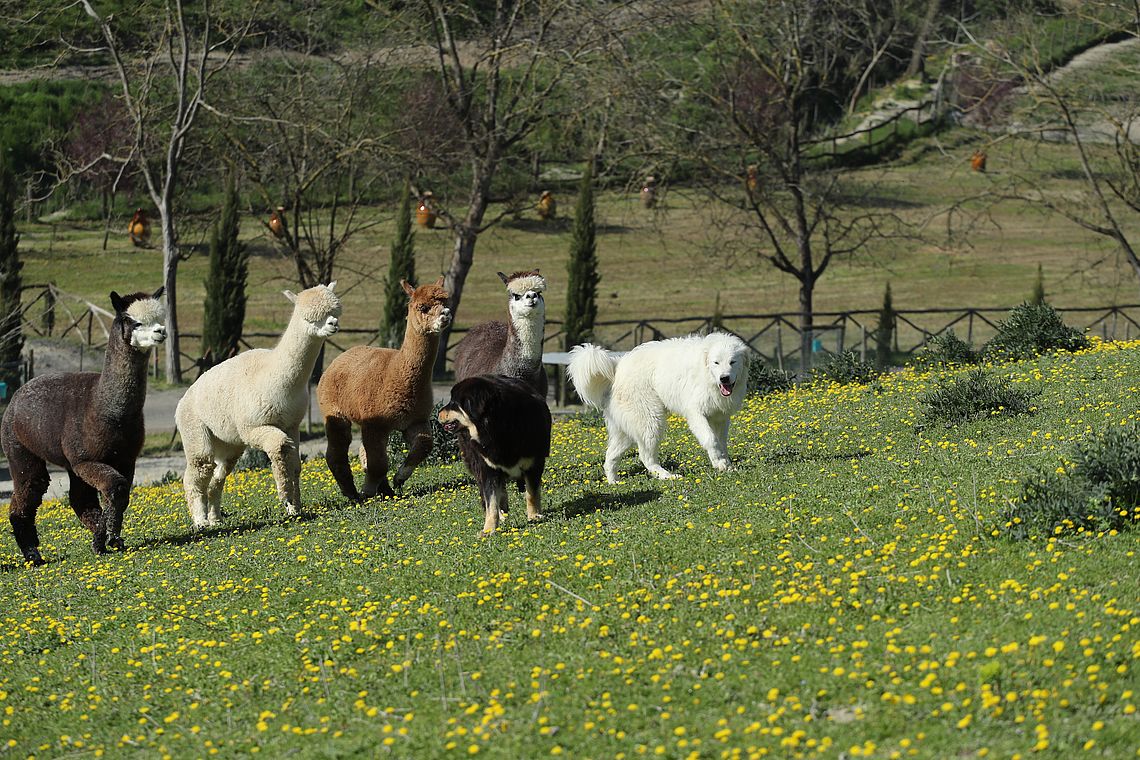
The Sila Sheepdog is one of those dogs that tells the story of a land. An ancient livestock guardian, it originates in Calabria, particularly on the Sila plateau, from which it takes its name. Over time, it has also spread to the Aspromonte area, but its true cradle remains the Sila, the green heart of the region.
In recent years, this breed has been gaining renewed attention: breeders and enthusiasts are working toward official recognition by ENCI, focusing on enhancing its qualities, defining a morphological and behavioral standard, and promoting its spread beyond Italy’s borders.
The “goatherd dog” of Calabria
The Sila Sheepdog is also known as the “goatherd dog,” as it has traditionally protected goat herds in this region. Unlike the Maremma-Abruzzese Sheepdog, which accompanies transhumant sheep across Abruzzo, Molise, Puglia, and the Lazio Maremma, the Sila dog has adapted to the harsher landscapes of Calabria, where goats thrive even on steep and rugged terrain.
Adopting a Sila Sheepdog means bringing home not just a dog, but also a piece of pastoral culture and tradition that, until a few decades ago, risked disappearing.
Appearance and coat
Often mistaken for a black Maremma, the Sila Sheepdog is actually quite different. While it shares a similar size and guardian role, its appearance is unique. The most typical coloration is black with tan markings, reminiscent of the Nicastrese goat, its historic grazing companion—an interesting example of “evolutionary convergence,” where dog and goat even share similar pigment distribution.
Alongside this traditional coat, there are also cream, blonde, or red individuals. White specimens are rarer and generally not selected for breeding, to avoid confusion with the Maremma-Abruzzese Sheepdog.
Sila vs. Maremma: a comparison
Those familiar with the Maremma-Abruzzese Sheepdog will quickly notice the differences, not only in appearance but especially in temperament and working style:
- Pack collaboration: the Sila Sheepdog works very well alongside other dogs, a trait less pronounced in the Maremma.
- Relationship with the owner: the Sila is more socially dependent on humans and, especially males, shows less dominance toward the owner compared to the more independent and sometimes stubborn Maremma.
- Guarding style: when goats leave the enclosure, Sila dogs scout the area ahead of the herd to check for predators, performing a preventive action, while the Maremma tends to remain close to the flock.
- Agility: Sila dogs are dynamic and quick. They easily jump walls, climb inclined trunks, and move with agility through forests. Despite their size, they have a fast metabolism and strong musculature, making them powerful yet light in movement.
Temperament and family life
The Sila Sheepdog is a rustic working dog, yet surprisingly modern. It enjoys physical contact, seeks affection, and can be playful with children. Females, being less territorial than males, can adapt more easily to urban life and even apartment living, while still maintaining their protective instinct.
Compared to the Maremma, the Sila is generally more affectionate and less wary. This makes it a suitable choice in contexts where livestock lives near villages, trails, or areas frequented by people and cyclists, thanks to its more balanced reactivity threshold.
One important note
Males can reach 50–60 kg and possess considerable strength. Managing them requires a physically capable owner: they are not suitable for being handled by children or elderly people, and they must be properly trained not to pull on the leash.
In summary, the Sila Sheepdog is an ancient yet contemporary dog, a loyal guardian of Calabrian goats that today can also become an excellent life companion. A breed that deserves recognition and appreciation—not only as a livestock protector, but as a living part of Italy’s cultural and zootechnical heritage.