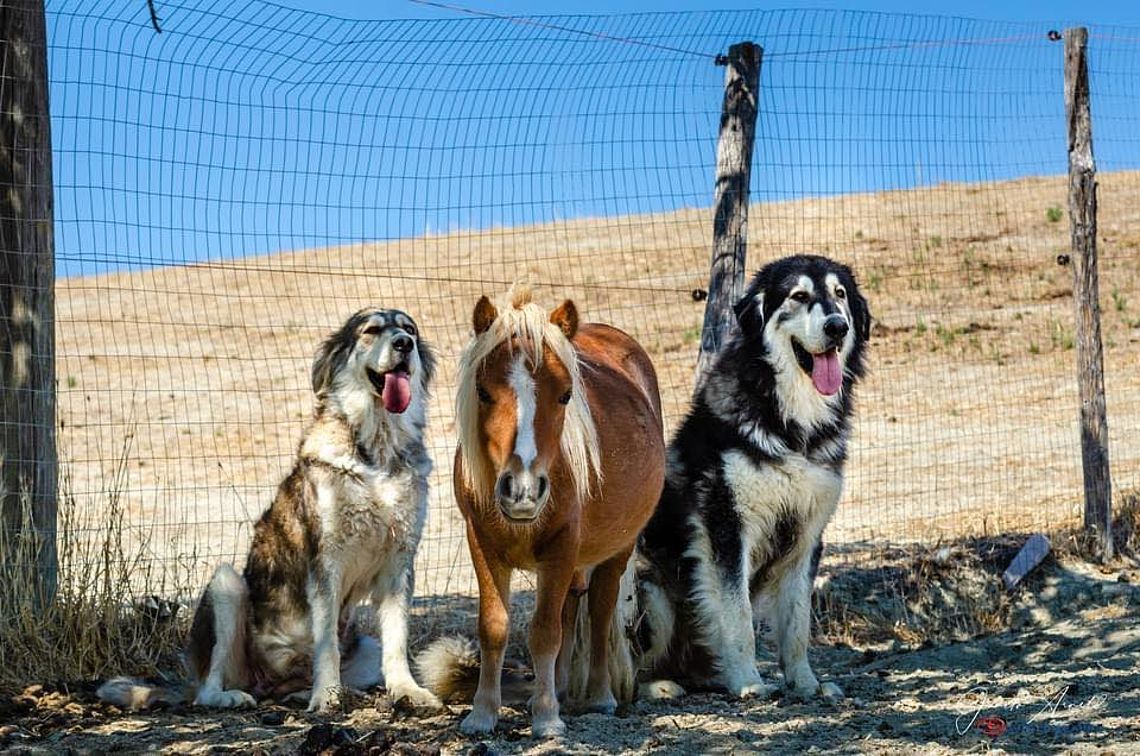
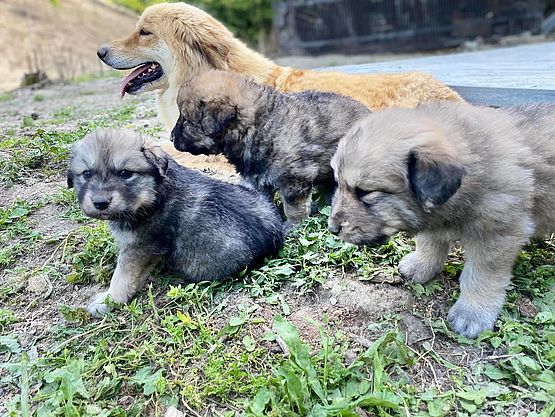
The coat of the Pastore della Sila is one of the most distinctive traits of the breed. It is straight, very abundant, rather coarse, and only moderately close to the body, with a texture described as semi-glassy. This particular coat structure serves an essential function: protecting the dog from the often harsh climatic conditions of the Sila plateau, where intense cold, wind, snow, and rain are not uncommon during winter.
A slight waviness of the coat is tolerated, but the hair must never be curly or woolly. A coat that is too soft or woolly would in fact be less functional for outdoor life and less effective in protecting the dog from moisture and bad weather.
The distribution of the coat varies across different parts of the body:
- on the muzzle, skull, and ears the hair is shorter;
- it is also shorter along the front edges of the limbs;
- on the rest of the body the length should not be less than 6 cm, helping to create a dense and protective coat.
A very evident feature is the mane around the neck, generally more developed in males. This mane enhances the dog’s proud and imposing appearance and also helps protect the neck area during possible confrontations with predators or hostile animals.
Moderate feathering is also present along the back edges of the limbs, while the tail is well covered with hair, giving the dog an overall rustic and natural appearance.
During the winter season the Pastore della Sila develops a very dense and abundant undercoat, which further increases its ability to withstand cold and difficult environmental conditions. This seasonal adaptation is typical of working dogs that live permanently outdoors.
Coat colors
The coat color of the Pastore della Sila is also closely linked to the historical function of the breed. The accepted colors are rustic, natural, and camouflage-like, perfectly integrated into the environmental context of the Calabrian mountains.
According to the breed standard, the accepted colors are mainly:
Black
Pure black is one of the most common colors in the breed. In this variety the undercoat is also black, and the coat appears uniform and intense.
Limited white markings are allowed, usually located on the chest, toes, or tip of the tail. This color gives the dog a particularly strong and elegant appearance.
Black and tan
The black and tan variety features a black coat with the typical “black and tan” pattern. The tan markings may range from a very light cream (called jelino) to an intense fawn color.
In this variety the undercoat remains black. White markings are generally not allowed, except for a small blaze on the forehead.
Sable
Sable is one of the most fascinating and variable colorations of the breed. The coat may display shades ranging from fawn to gray, with a typical black overlay that gives depth and complexity to the color.
In this variety small white markings on the chest, toes, and tip of the tail are allowed.
Other shades
In addition to the main colors, solid shades or variations within the rustic color spectrum of the breed may appear, such as:
- fawn
- honey
- cream
- red
These shades must always maintain a natural appearance consistent with the coat type typical of the breed.
Coat faults
In the selection of the Pastore della Sila, some coat characteristics are considered faults because they deviate from the historical typicity of the breed.
In particular:
- a piebald coat is considered a fault;
- the presence of excessive white is considered undesirable.
Completely white dogs or individuals with a very large amount of white are rare within the breed population and are generally not preferred for breeding, precisely because they deviate from the traditional and functional model of the Sila working dog.
The camouflage function of the coat
One of the most interesting aspects of the Pastore della Sila is the natural camouflage of its coat. The breed’s colors closely resemble those of the native Calabrian goats, with which these dogs have shared the environment and daily work for centuries.
Not surprisingly, the breed standard emphasizes that the Pastore della Sila:
“Reflects, both in color and appearance, the coat of the native Calabrian goats.”
This resemblance is not purely aesthetic. It represents a functional adaptation developed over time through natural selection and the choices made by shepherds.
While guarding the flock, the dog can visually blend in with the animals it protects, making it less noticeable to potential predators. This camouflage provides a strategic advantage in livestock defense, allowing the Pastore della Sila to intervene more effectively and with greater surprise in case of a threat.
The rustic and natural coat colors are therefore not merely an aesthetic feature but a true functional legacy of the pastoral traditions of the Sila region, testifying to the deep connection between this breed, its territory, and the ancient livestock-raising practices of the Calabrian plateau.